
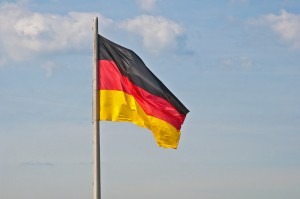
 The German flag is familiar to many because of its three notable colors. The three tones are arranged horizontally on the banner, with each stripe having the same size. The colors are gold, black and red. Before, the German flag did not have the three colors. In 1886 after the Austro-Prussian War, the North German Confederation, featured a flag of three colors, but these were white, black and red. The German Empire banner was established after Germany unified in 1871. The flag was displayed until 1918. In the 1930s, Nazi Germany was brewing so the black, red and white banner was raised again to show the national colors.
In the 19th century, the German flag featured the gold, black and red tones. Weimar Republic was set up after the First World War A new flag of three colors became the official flag of the country. After the Second World War, the flag became the main banner of West and East Germany. The two flags was similar until East Germany featured a new banner with a coat of arms in 1959. In 1990, the two sides reunited and the tricolor that we see today was set up.
The present colors of the German flag symbolized the republican democracy that was established after the Second World War. German independence and strength are represented by the three colors – black, red and gold. The colors also symbolize the very people of Germany instead and the independence that they each hold. These flags can be seen everywhere today.